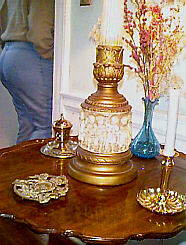
 The temporary melancholy, now driven away by the light and warm wood, we were
delighted to find that unlike most attractions
The temporary melancholy, now driven away by the light and warm wood, we were
delighted to find that unlike most attractions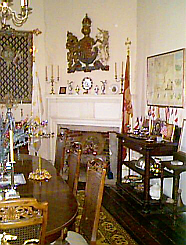 in the area, our host had no objections
to photographs with or without flash, nor did he have any restrictions on touching
things as he would often pick up some antique or picture and hand it to us to be
examined, while he expounded on its place in history. We found ourselves caught up in
the energy of our host as he explained in short energized statements that few people
realize that most very early buildings do not retain their original interiors, having
been remodeled through the years. But Springfield remains almost entirely original,
including the magnificent Georgian-Adams-Federal woodwork and mantels, hand carved
in Virginia in the 18th century. As he took us through the rooms which had seen so
much history, where from the upstairs gallery, we could see the vast
in the area, our host had no objections
to photographs with or without flash, nor did he have any restrictions on touching
things as he would often pick up some antique or picture and hand it to us to be
examined, while he expounded on its place in history. We found ourselves caught up in
the energy of our host as he explained in short energized statements that few people
realize that most very early buildings do not retain their original interiors, having
been remodeled through the years. But Springfield remains almost entirely original,
including the magnificent Georgian-Adams-Federal woodwork and mantels, hand carved
in Virginia in the 18th century. As he took us through the rooms which had seen so
much history, where from the upstairs gallery, we could see the vast
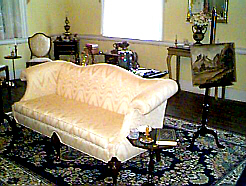 remaining
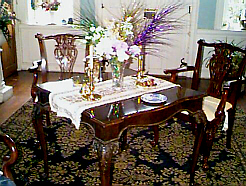 1000 acres stretched out in all directions. A sight that has remained almost unchanged for
the past few centuries, he explained that Springfield is still a working plantation after
more than two centuries, while still reflecting the beauty, elegance and romance of
the Colonial South during the colorful days of Spanish rule. Springfield's oldest
remaining slave quarter house has been restored and a visit down the old "quarter
road" is a most interesting and beautiful walk.
1000 acres stretched out in all directions. A sight that has remained almost unchanged for
the past few centuries, he explained that Springfield is still a working plantation after
more than two centuries, while still reflecting the beauty, elegance and romance of
the Colonial South during the colorful days of Spanish rule. Springfield's oldest
remaining slave quarter house has been restored and a visit down the old "quarter
road" is a most interesting and beautiful walk.
Springfield is in reconstruction with much of the work still to be done. Arthor, who
has been living in the house for almost a decade, has done much of the work himself,
as he
 has an agreement with the owners that he can live in the house for as long as
he wishes.
has an agreement with the owners that he can live in the house for as long as
he wishes.
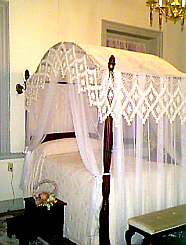 But he is concerned that there is no one to take his place and fears that
the house will once again fall into disrepair after he dies. As we watched and
listened, he would wander from subject to subject, telling us about the days when he
rebuilt antique trains for a living. There are some pretty interesting memorabilia
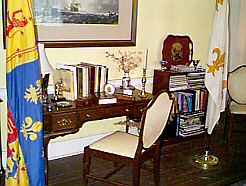
from the old train era, displayed on the second floor. A staunch defender of the
French and the period of time France dominated the area, he proudly displays an
assortment of antique flags from an variety of times and places dealing with the
But he is concerned that there is no one to take his place and fears that
the house will once again fall into disrepair after he dies. As we watched and
listened, he would wander from subject to subject, telling us about the days when he
rebuilt antique trains for a living. There are some pretty interesting memorabilia
from the old train era, displayed on the second floor. A staunch defender of the
French and the period of time France dominated the area, he proudly displays an
assortment of antique flags from an variety of times and places dealing with the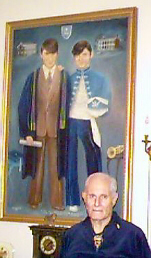 area. His depiction of the history of early America is like nothing we had ever heard,
as he explained the existence of the fourteenth and fifteenth colonies and the
existence of West Florida.
area. His depiction of the history of early America is like nothing we had ever heard,
as he explained the existence of the fourteenth and fifteenth colonies and the
existence of West Florida.
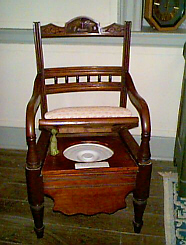 His small office in the back of the house is a display room
for the many articles he has written on history, including a letter he wrote to the
Queen of England setting forth certain historical beliefs and establishing plausible
proof there in, and the response he received. It was Laura that first made the
connection between the many paintings displayed on the walls and our delightful
host. The small "LaSalle" in the lower right corner of each offering said it all. When
asked, he admitted that most of the paintings had been done by him, and spanned
many years. He was particularly fond of the one of his sons.
It was from he, that we learned of the destination of our next
adventure, the Ghost Town of Rodney several miles away. We left in the dark, the
day's light having long since passed. In driving away I wondered about the loneliness
of the surroundings and if I would ever have been able to exist on such things as
dreams are made of.
. . .
His small office in the back of the house is a display room
for the many articles he has written on history, including a letter he wrote to the
Queen of England setting forth certain historical beliefs and establishing plausible
proof there in, and the response he received. It was Laura that first made the
connection between the many paintings displayed on the walls and our delightful
host. The small "LaSalle" in the lower right corner of each offering said it all. When
asked, he admitted that most of the paintings had been done by him, and spanned
many years. He was particularly fond of the one of his sons.
It was from he, that we learned of the destination of our next
adventure, the Ghost Town of Rodney several miles away. We left in the dark, the
day's light having long since passed. In driving away I wondered about the loneliness
of the surroundings and if I would ever have been able to exist on such things as
dreams are made of.
. . .
***THE END***