Roosevelt National Park
The North Dakota Badlands
Medora, North Dakota
June 14th, 1998
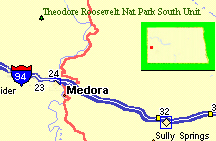 As you drive along I-94 near the North Dakota-
Montana border you will notice an abrupt change
in the geography. You have entered the
“Badlands”. That famed area of outlaws and
Indians depicted in old 10 cent novels written
around the turn of the century. They was properly
named for their inhospitality to those unfortunate
or desperate enough to pass through them.
First deposited as sediment by a giant inland sea
some 70 million years ago, these layers of sand,
silt, clay and lignite coal, have been carved by
rain and melting snow, wind and the waters of the
Little Missouri River.
As you drive along I-94 near the North Dakota-
Montana border you will notice an abrupt change
in the geography. You have entered the
“Badlands”. That famed area of outlaws and
Indians depicted in old 10 cent novels written
around the turn of the century. They was properly
named for their inhospitality to those unfortunate
or desperate enough to pass through them.
First deposited as sediment by a giant inland sea
some 70 million years ago, these layers of sand,
silt, clay and lignite coal, have been carved by
rain and melting snow, wind and the waters of the
Little Missouri River.
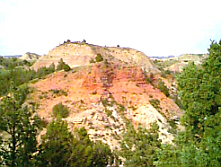 The tops of many hills
display a brick red color. This is the result of the
formation of “scoria”, similar to the true lava, but
formed many years ago, when heat from adjacent,
slowly burning coal beds, changed the clay into
this hard red material, which is much harder than
the other rocks and thus better resistant to erosion,
producing a red cap for many of the bluffs.
37 miles west of Dickinson, North Dakota you
will find the town of Medora. This little cattle
town was founded in 1883 by a French nobleman,
the Marquis de Mores, who named it after his
wife. The Chateau deMores, a 28 room home, is
still standing and is managed by the North Dakota
State Historical Society. Guided tours are
available.
The tops of many hills
display a brick red color. This is the result of the
formation of “scoria”, similar to the true lava, but
formed many years ago, when heat from adjacent,
slowly burning coal beds, changed the clay into
this hard red material, which is much harder than
the other rocks and thus better resistant to erosion,
producing a red cap for many of the bluffs.
37 miles west of Dickinson, North Dakota you
will find the town of Medora. This little cattle
town was founded in 1883 by a French nobleman,
the Marquis de Mores, who named it after his
wife. The Chateau deMores, a 28 room home, is
still standing and is managed by the North Dakota
State Historical Society. Guided tours are
available.
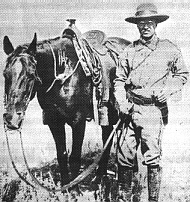 It was also the year that Theodore
Roosevelt came to the Badlands, looking for
solitude after the death of his wife. He was so
impressed with the territory that he would later
return to start up two cattle ranches. The Maltese
Cross ranch and a year later, the Elkhorn ranch.
It was Roosevelt’s love of hunting that had
brought him to the Badlands originally and it was
to his dismay, that the great buffalo herds were
gone. He also witnessed the disappearance of
several other large game animals as well, due to
the grasslands being slowly destroyed by
overgrazing.
It was also the year that Theodore
Roosevelt came to the Badlands, looking for
solitude after the death of his wife. He was so
impressed with the territory that he would later
return to start up two cattle ranches. The Maltese
Cross ranch and a year later, the Elkhorn ranch.
It was Roosevelt’s love of hunting that had
brought him to the Badlands originally and it was
to his dismay, that the great buffalo herds were
gone. He also witnessed the disappearance of
several other large game animals as well, due to
the grasslands being slowly destroyed by
overgrazing.
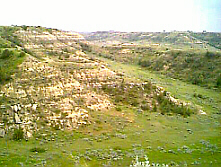 This experience and his heightened
desire to protect and preserve such natural beauty
would serve as a driving force during his
presidency between 1901 and 1914. During that
time he would create the National Forest Service
and establish the first Federal Game Preserve.
His conservation efforts led to the creation of the
National Park Service. It is to this effort that this
National Park is dedicated.
The park is broken up into a North and South
Unit. Our attention was to the south who’s
entrance is in Medora. This park entrance and
museum is opened all year round except winter
holidays. Roosevelt’s first cabin at the Maltese
Cross Ranch was relocated here and available for
tours. There is a 36 mile well paved loop with
many lookovers and stopoffs.
We had stopped in Dickinson to visit our
daughter, Vickie, and her husband, Eric.
This experience and his heightened
desire to protect and preserve such natural beauty
would serve as a driving force during his
presidency between 1901 and 1914. During that
time he would create the National Forest Service
and establish the first Federal Game Preserve.
His conservation efforts led to the creation of the
National Park Service. It is to this effort that this
National Park is dedicated.
The park is broken up into a North and South
Unit. Our attention was to the south who’s
entrance is in Medora. This park entrance and
museum is opened all year round except winter
holidays. Roosevelt’s first cabin at the Maltese
Cross Ranch was relocated here and available for
tours. There is a 36 mile well paved loop with
many lookovers and stopoffs.
We had stopped in Dickinson to visit our
daughter, Vickie, and her husband, Eric.
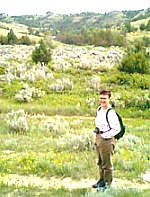 They had moved to Dickinson several years ago when
Eric accepted a Professorship at Dickinson State
University. Now an Associate Professor of
Biology, Eric was an ideal tour guide and Vickie
was a wealth of information on the flora and
fauna, we were about to see.
They had moved to Dickinson several years ago when
Eric accepted a Professorship at Dickinson State
University. Now an Associate Professor of
Biology, Eric was an ideal tour guide and Vickie
was a wealth of information on the flora and
fauna, we were about to see.
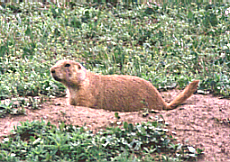 Our first stop was at
a prairie dog town. Yes they live in towns.
Hundreds of them, all in their individual boroughs
along flat stretches, on both sides of the road.
These small squirrel-like creatures maintain a
constant vigil, and set up a crisp chirping sound
whenever something or someone approaches.
This is picked up by nearby neighbors and the
whole town sounds off. We stopped several miles
into the loop, to take a short trek into the brush
country along the Jones Creek Trail.
Our first stop was at
a prairie dog town. Yes they live in towns.
Hundreds of them, all in their individual boroughs
along flat stretches, on both sides of the road.
These small squirrel-like creatures maintain a
constant vigil, and set up a crisp chirping sound
whenever something or someone approaches.
This is picked up by nearby neighbors and the
whole town sounds off. We stopped several miles
into the loop, to take a short trek into the brush
country along the Jones Creek Trail.
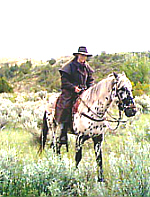 At the trailhead we met 4 riders who had been riding for
six hours and had mis-located their vehicle. This
is not hard to do in such a rolling country side.
Laura and Eric took one of them in search of their
vehicle, while Vickie and I struck off on the trail.
At the trailhead we met 4 riders who had been riding for
six hours and had mis-located their vehicle. This
is not hard to do in such a rolling country side.
Laura and Eric took one of them in search of their
vehicle, while Vickie and I struck off on the trail.
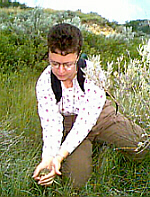 Shortly Vickie’s ears picked up a sound and she
went scurrying off into the brush, to emerge with a
Woodhouse Toad. One of the many creatures that
share the trail. After a short examination, the
hopper was sent on his way to whatever destiny
awaited him. We then continued along the trail to
photograph species of wildflower for our yet to be
developed web page on Nature. Having joined up
with Laura and Eric, who had sent the horsemen
on their way, we worked our way back to the loop
to continue our drive. On the far side, we ran into
an unexpected surprise.
Shortly Vickie’s ears picked up a sound and she
went scurrying off into the brush, to emerge with a
Woodhouse Toad. One of the many creatures that
share the trail. After a short examination, the
hopper was sent on his way to whatever destiny
awaited him. We then continued along the trail to
photograph species of wildflower for our yet to be
developed web page on Nature. Having joined up
with Laura and Eric, who had sent the horsemen
on their way, we worked our way back to the loop
to continue our drive. On the far side, we ran into
an unexpected surprise.
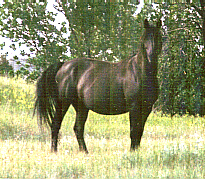 Three wild horses, fairly
close to the road. Keeping in mind the many
warnings printed about the aggressiveness of the
wild animals within the park, I slowly approached
the black one. I was surprised how different his
demeanor was from the domestic horses I was use
to. This was his territory
Three wild horses, fairly
close to the road. Keeping in mind the many
warnings printed about the aggressiveness of the
wild animals within the park, I slowly approached
the black one. I was surprised how different his
demeanor was from the domestic horses I was use
to. This was his territory
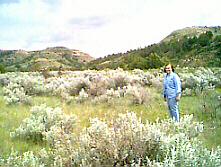 and I was the intruder
and he was making no beans about it, I WAS
NOT WELCOME! He maintained his space
between me and the mare with her colt, neither
advancing nor giving ground. One quick click of
the camera and I was gone. The rest of the ride
was breathtaking with valleys and bluffs changing
with every turn. I could feel a certain
disappointment coming on as we approached the
end of the loop having not spotted any buffalo.
Then as we made a turn, there he was. High on a
distant bluff, all alone, grazing. As I lost sight of
him in the next turn, I remembered Roosevelt’s
dismay at the loss of the great Buffalo herds that
once dominated this area.
and I was the intruder
and he was making no beans about it, I WAS
NOT WELCOME! He maintained his space
between me and the mare with her colt, neither
advancing nor giving ground. One quick click of
the camera and I was gone. The rest of the ride
was breathtaking with valleys and bluffs changing
with every turn. I could feel a certain
disappointment coming on as we approached the
end of the loop having not spotted any buffalo.
Then as we made a turn, there he was. High on a
distant bluff, all alone, grazing. As I lost sight of
him in the next turn, I remembered Roosevelt’s
dismay at the loss of the great Buffalo herds that
once dominated this area.
***THE END***