Louisiana
Lafayette and Avery
Island
February 8-11, 1998
We pulled out of Mobile, Al., and continued our quest westward
 on
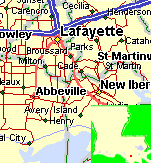
I-10. Arriving in Lafayette La., we selected a campsite several
miles south of the city on US-90. Our first adventure was to the
Acadian Cultural Center. The Acadians came primarily from rural
areas of the Vendee region of western France, and began settling in
Acadie, now Nova Scotia in 1604. There they prospered as
farmers and fishermen. In 1713, Great Britain acquired control of
Acadie, but the Acadians did not become cooperative British
subjects, preferring to maintain their independence and freedoms.
Finally in 1755, the British began the removal of the Acadians
from their new
homeland. The British spread these people out along
the British colonies and the Caribbean. Their
lives were mostly
bleak and opportunities limited until the
on
I-10. Arriving in Lafayette La., we selected a campsite several
miles south of the city on US-90. Our first adventure was to the
Acadian Cultural Center. The Acadians came primarily from rural
areas of the Vendee region of western France, and began settling in
Acadie, now Nova Scotia in 1604. There they prospered as
farmers and fishermen. In 1713, Great Britain acquired control of
Acadie, but the Acadians did not become cooperative British
subjects, preferring to maintain their independence and freedoms.
Finally in 1755, the British began the removal of the Acadians
from their new
homeland. The British spread these people out along
the British colonies and the Caribbean. Their
lives were mostly
bleak and opportunities limited until the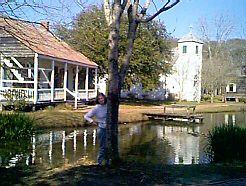 Spanish government
invited them to South Louisiana. By the turn of the century there were 3 to 4 thousand
Acadians living in southern Louisiana. The Acadian village offers a glimpse of the earlier times with many of its structures being
transplanted from their original settings of abandonment and decay to this park. These
original structures and their associated replicas, along with the artifacts
held within them
are a genuine representation of a time gone by. In contrast, Vermilionville, Lafayette's
original name, is a 23 acre
Spanish government
invited them to South Louisiana. By the turn of the century there were 3 to 4 thousand
Acadians living in southern Louisiana. The Acadian village offers a glimpse of the earlier times with many of its structures being
transplanted from their original settings of abandonment and decay to this park. These
original structures and their associated replicas, along with the artifacts
held within them
are a genuine representation of a time gone by. In contrast, Vermilionville, Lafayette's
original name, is a 23 acre 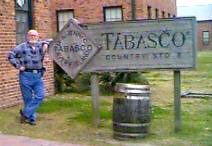 park located off Surrey St. is a showplace. Carefully crafted
period homes filled with artifacts and antiques reflecting the historic Acadian/Creole
lifestyle is accented by craftspeople and living historians demonstrating skills passed down
through generations. Some twenty odd miles south of Lafayette is Avery Island, home of the Tabasco pepper
sauce. History records that a well to do New Orleans banker by the name of Edmond McIlhenny
married a young Avery who's parents owned the Island. Its main value at the time was a brine
salt spring which produced small
park located off Surrey St. is a showplace. Carefully crafted
period homes filled with artifacts and antiques reflecting the historic Acadian/Creole
lifestyle is accented by craftspeople and living historians demonstrating skills passed down
through generations. Some twenty odd miles south of Lafayette is Avery Island, home of the Tabasco pepper
sauce. History records that a well to do New Orleans banker by the name of Edmond McIlhenny
married a young Avery who's parents owned the Island. Its main value at the time was a brine
salt spring which produced small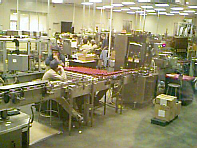 amounts of rock salt. During the Civil War the hole was
widened and at a depth of 16 feet, solid rock salt was discovered. This was used to supply
the Confederacy until a Union attack in 1863 ended its Southern control. During the shelling,
it is reported that Edmond, seeing a live shrapnel cannon ball with its fuse still burning,
picked it up and threw it out a window thus saving the lives of his family.
After the war,
with economic prospects dim, Edmond left New Orleans and moved onto the Island where he
continued his hobby of gardening. During this time he isolated a variety of
amounts of rock salt. During the Civil War the hole was
widened and at a depth of 16 feet, solid rock salt was discovered. This was used to supply
the Confederacy until a Union attack in 1863 ended its Southern control. During the shelling,
it is reported that Edmond, seeing a live shrapnel cannon ball with its fuse still burning,
picked it up and threw it out a window thus saving the lives of his family.
After the war,
with economic prospects dim, Edmond left New Orleans and moved onto the Island where he
continued his hobby of gardening. During this time he isolated a variety of
 capsicum pepper
and began experimenting with different sauces, finally producing his final product which he
called Tobasco. He first produced around 300 bottles which he gave away as Christmas presents.
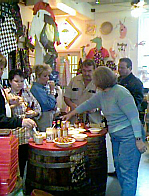
Soon after that orders started coming in, and he went commercial. Today the product is manufactured in a single plant located in the middle of the island.
The original 300 bottles has been increased to over four hundred thousand bottles a day.
The process has changed very little with only a minimum amount of machinery involved. The
peppers are still picked by hand, mixed with island salt and a high grade vinegar. Those are
the only ingredients involved. The sauce is then put in white oak barrels for around 3 years
where a transformation into Tobasco pepper sauce occurs. The product is presently sold in over
100 countries.
capsicum pepper
and began experimenting with different sauces, finally producing his final product which he
called Tobasco. He first produced around 300 bottles which he gave away as Christmas presents.
Soon after that orders started coming in, and he went commercial. Today the product is manufactured in a single plant located in the middle of the island.
The original 300 bottles has been increased to over four hundred thousand bottles a day.
The process has changed very little with only a minimum amount of machinery involved. The
peppers are still picked by hand, mixed with island salt and a high grade vinegar. Those are
the only ingredients involved. The sauce is then put in white oak barrels for around 3 years
where a transformation into Tobasco pepper sauce occurs. The product is presently sold in over
100 countries.
*** THE END ***